Snowfall Insurance

If your entity has revenues or expenses that fluctuate with the weather, such as the amount of snowfall, a cost containment / revenue stabilization insurance policy should put you at ease.  We offer snow insurance policies that address the risk of either too much or too little snow and/or rain, as well as too hot or too cold.

  • Cumulative Snow Coverage.  This coverage provides for a claim if a specific amount of snow occurs, or fails to occur, over a specific time period.  Policies are also available that pay a claim based on a lack of snow accumulation over a specified timeframe.
  • Snow Event Coverage.  This coverage provides for a claim if a specific number of snowfall events (storms) occur over a specific time period. If an insufficient amount of snowfall events occur over a certain period of time, we have available policies that will pay that claim.
  • Other Options.  We will work with you to design a policy to meet your own unique requirements, including policies that address the occurrence of extreme snow events, freeze, heat, excess rain, drought, and wind just to name a few.  Call us to discuss your unique situation.
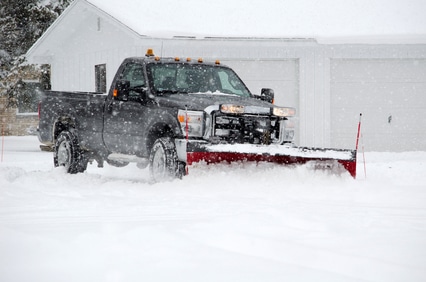
Snowfall Insurance for Cost Containment

As an example, a snow-based cost containment policy insurance, commonly referred to simply as “snow insurance,” is designed to help protect snow-sensitive cash flows that are exposed to an excess of snowfall.  Such a snow insurance policy could be employed by the following:

  • Snow Contractors
  • Property Managers
  • Condo or Home Owners Associations
  • Municipalities
  • Retail Property Owners
  • Airports
  • School Districts
  • Colleges and Universities
  • Real Estate Investment Trusts

Are you a snow removal contractor that has a majority of  pay-per-push or time and materials types of contracts?  If so, then a snow insurance policy that pays based on a lack of snowfall may be for you.  Give us a call to discuss your own, unique snow insurance needs.

If your entity has revenues or expenses that fluctuate with snowfall, obtaining a snowfall insurance policy should put you at ease.  We offer snow insurance policies that address the risk of either too much or too little snow.

Snowfall Insurance Frequently Asked Questions – FAQs

Snowfall insurance is a weather-based cost containment and revenue stabilization policy that pays a claim when snowfall does — or doesn’t — reach an agreed-upon threshold. It’s designed for organizations whose revenues or expenses swing with the weather, so a mild winter or a record-setting one doesn’t wreck the budget. Coverage can also be structured around freeze, heat, excess rain, drought, and wind.

Every policy is tailored to the business buying it, but it generally falls into one of two categories: a policy that pays a claim for a lack of snowfall, and a policy that pays a claim for excessive snowfall. Snow removal contractors with a slow winter can file claims to make up for the plowing jobs that never came. Contractors who staffed lean in anticipation of a mild season can file claims to cover overtime after the few big storms that do hit.

There are three main structures. Cumulative Snow Coverage pays a claim if a specific amount of snow occurs — or fails to occur — over a defined time period. Snow Event Coverage pays a claim based on the number of snowfall events (storms) in a period, including policies that pay out when too few storms occur. Custom options can also be designed around extreme snow events, freeze, heat, excess rain, drought, and wind.

Snow-based cost containment policies are commonly used by snow contractors, property managers, condo and homeowners associations, municipalities, retail property owners, airports, school districts, colleges and universities, and real estate investment trusts. Any organization with snow-sensitive cash flow is a candidate.

Yes. If your business runs mostly pay-per-push or time-and-materials contracts, a lack of snow directly reduces revenue. A policy structured around insufficient snowfall pays a claim when accumulation or storm counts fall short over the covered period.

Yes. Excess snowfall coverage protects against the opposite risk — the season where costs balloon from overtime, fuel, subcontractors, and materials. This is the structure most often used by property managers, municipalities, and organizations on fixed-price seasonal contracts.

Ideally before the winter plowing season begins, so the premium can be built into your budget and pricing. That said, coverage can be purchased at any point during the season as long as it’s secured at least 10 days in advance of the desired coverage period.

Yes. Coverage can be tied to individual contracts whether the client pays per push or per season. It’s especially useful on per-push accounts, where you can insure against a winter that’s too mild to break even on the contract.

Pricing a contract to stay profitable whether you plow once or 100 times leads to overcompensation and higher prices for your customers. With snowfall insurance protecting your revenue and containing your costs, you can price more competitively because you’re not padding for weather swings — which wins new customers and reassures existing ones.

You can build the coverage into the price of a fixed contract or offer it as an add-on. When snowfall comes in below average, your clients receive a rebate on services they paid for but didn’t need. When snowfall runs above average, your company receives a payout to cover the added expense. It adds value for the customer and creates an additional revenue stream for you.

Your Content Goes Here

No. Liability and property policies respond to damage and claims of fault. Snowfall insurance is a weather-triggered financial product — it responds to measured snowfall data at a defined location, not to physical loss. Most businesses carry both.

Still have questions? Please contact us anytime!
We look forward to hearing from you.

816-810-2346