Recently, I heard about an insurance broker who placed a rain insurance policy with a non-admitted carrier, even though an admitted carrier was available. In many states, this is a direct violation of insurance regulations. Unfortunately, the client often doesn’t realize there’s a problem until it’s too late.
For fairs, festivals, and outdoor events, this kind of mistake can create serious financial and legal risk.
Admitted vs. Non-admitted Carriers: Why it Matters
 An admitted carrier is licensed and regulated by a state’s department of insurance. These carriers must meet strict financial requirements, adhere to approved policy forms, and participate in state guaranty funds that provide an additional layer of protection if an insurer fails.
A non-admitted carrier, such as a Lloyds syndicate, by contrast, is not licensed in that state. While non-admitted policies can be appropriate in limited situations, they are typically only allowed when no admitted carrier is willing to offer coverage. Many states require brokers to prove that admitted options were unavailable before turning to the non-admitted market.
When a broker skips that step, the client may be exposed to:
- Policies that violate state insurance regulations
- Coverage that could be deemed invalid or unenforceable
- No protection from state guaranty funds if the insurer fails
- Complications or delays when filing a claim
- Potential regulatory issues for the event organization
In short, what looks like “coverage” on paper may not protect the event when weather actually strikes.
Why This Happens More Often Than it Should
 Most problems like this don’t come from bad intentions. They come from lack of specialization.
Weather insurance is a niche product. Rain triggers, data sources, payout structures, and regulatory requirements are very different from standard property or liability insurance. A generalist broker may not fully understand when non-admitted placement is allowed, or when it clearly is not.
In some cases, a broker may also be chasing a quicker placement or higher commission, without fully explaining the regulatory or financial trade-offs to the client.
Either way, the risk ends up in the hands of the fair or event organizer.
The Real Danger Shows Up at Claim Time
Problems with improperly placed policies often stay hidden until a loss occurs. That’s when event organizers discover:
- The carrier is slow to respond or disputes jurisdiction
- The policy language doesn’t align with state requirements
- Regulators raise questions about the policy’s validity
- Legal counsel gets involved, adding time and expense
For fairs and festivals already dealing with weather-related disruption, this can turn a manageable setback into a major financial hit.
How a Weather Insurance Specialist Helps Avoid These Pitfalls
 Working with a specialist like Spectrum Weather Insurance significantly reduces these risks.
As a firm focused exclusively on weather risk, Spectrum understands:
- Which carriers are admitted in each state
- When non-admitted placement is appropriate and legally allowed
- How surplus lines rules apply to weather insurance
- How policy structure and regulation affect claims outcomes
Instead of forcing a policy into place, a specialist takes the time to confirm that coverage is compliant, appropriate, and defensible if a claim occurs.
Just as importantly, Spectrum works with multiple carriers, allowing clients to compare options without cutting regulatory corners. If an admitted option exists, it is used. If a non-admitted solution is truly required, it is clearly explained and properly documented.
Click Here to Find Out More About Our Rain Insurance Options
Better Compliance Leads to Better Claims Service
Regulatory compliance isn’t just about following rules. It directly affects claims performance.
When coverage is placed correctly:
- Claims move faster
- There are fewer disputes over policy validity
- Event organizers know exactly how payouts are determined
- There are no surprises when weather triggers are met
That peace of mind is especially important for fairs and festivals, where weather-related losses can affect not just one event but future operations as well.
The Bottom Line For Event Organizers
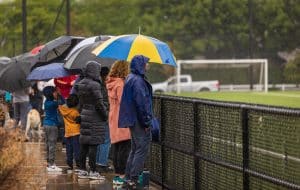 Weather insurance should reduce risk, not create new ones. A policy placed incorrectly, with the wrong carrier, or in violation of state rules can leave an event exposed when protection matters most.
Before purchasing rain or weather insurance, event organizers should ask:
- Is the carrier admitted in my state?
- If not, why is non-admitted coverage being used?
- Are admitted options available?
- Does my broker specialize in weather insurance?
Working with a dedicated specialist like Spectrum Weather Insurance helps ensure coverage is not only competitive and well-designed, but also compliant, reliable, and there when you need it.
When it comes to weather risk, cutting corners can be far more expensive than getting it right the first time.
Click Here to Learn More About Weather and Rain Insurance Options